
Why Small QA Teams Need Risk-Based Release Decisions
Learn how lean SaaS QA teams can prioritize testing by customer impact, change risk, and failure history for safer, faster releases.
Replace Exhaustive Testing with Risk-Based Focus

Small SaaS teams rarely have enough time or people to test every feature, workflow, integration, and device before each release. Trying to achieve exhaustive coverage can create the illusion of safety while delaying valuable changes. A stronger QA strategy starts by asking which risks matter most to customers and the business. A payment calculation, authentication flow, or data export deserves more attention than a low-impact copy change, even if both touch production code.
Risk-based testing combines three signals: customer impact, change risk, and failure history. Customer impact identifies what could damage revenue, trust, compliance, or daily workflows. Change risk considers the size and location of a code change, affected services, dependencies, and deployment complexity. Failure history highlights areas that have broken before or frequently produce misleading automated failures. Together, these signals help teams direct automation, focused staging checks, and human review where they provide the greatest reduction in release risk. This approach makes release management more deliberate without making it slower.
Turn Release Risk into a Practical Testing Plan
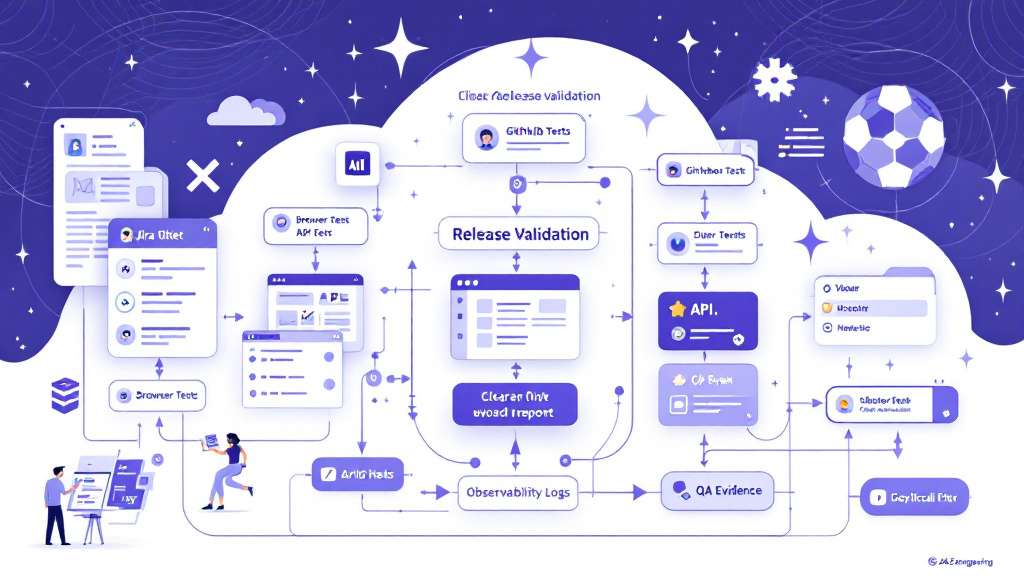
A useful risk-based testing framework translates assessment into clear actions. First, map the merged change to the business workflows it could affect. Read the work item, inspect the diff, identify changed services and dependencies, and review recent incidents or flaky checks. Next, assign a simple risk level based on impact and uncertainty. High-impact or high-uncertainty changes should receive targeted browser and API coverage in staging, while moderate-risk changes may need a smaller regression set and visual or error-log checks.
The goal is not to test everything; it is to test the right evidence. A billing change might trigger Playwright checks for checkout, API assertions for tax calculations, screenshot comparisons for receipts, and observability review for new errors. A lower-risk interface adjustment may need visual validation and a focused workflow check. ReleaseEvidence can analyze tickets, GitHub diffs, test history, and staging results to assemble this evidence, then attach it to the relevant work item. By connecting checks to the actual change, QA teams spend less time searching for context and more time evaluating meaningful results.
Keep Human Approval at the Center of the Decision

Automation is most valuable when it improves human judgment rather than pretending to replace it. A failed check should explain what happened, why it may matter, and what someone should do next. Likewise, a passing suite should show which customer workflows were actually covered and which risks remain unknown. This is where evidence-backed release decisions make a difference: QA reviewers receive results, screenshots, logs, affected areas, and recommended manual checks in one place.
A practical release management model can use three outcomes: Approve when relevant evidence supports the change and no material risks remain; Investigate when results are incomplete, ambiguous, or reveal a possible defect; and Reject when a confirmed issue threatens customers or core business behavior. This structure gives QA leads and engineering managers a shared language for accountable decisions. It also increases review capacity for small teams: automation handles repetitive evidence gathering, while people apply context, judgment, and ownership. Risk-based testing is therefore not a shortcut around quality. It is a disciplined way to focus SaaS quality work on the failures customers can least afford.